
I have always been interested in personal finance, and I'd been tracking everything in Excel for years. Eventually I decided to challenge myself and build a real platform. QuidXy is the result. It's live at quidxy.com, gated by my Google account, and nobody else can get in.
The requirements
I like to stay ahead of my money. Excel got me most of the way for years, but it was manual entry, manual categorization, manual everything. I wanted to push myself and build something that did the hard work for me.
The architecture
The trust perimeter ends at my hardware. The dashboard is public at quidxy.com, but my home network has zero inbound ports. A Cloudflare Tunnel reaches outward; it never accepts an inbound connection. Cloudflare Access at the edge handles authentication via Google OAuth on an allowlist of exactly one email, mine. My Flask app then re-verifies Cloudflare's JWT against its JWKS on every request. Defense in depth, because the edge layer is configurable through a web dashboard and I don't want my data's security depending on me never misclicking a checkbox.
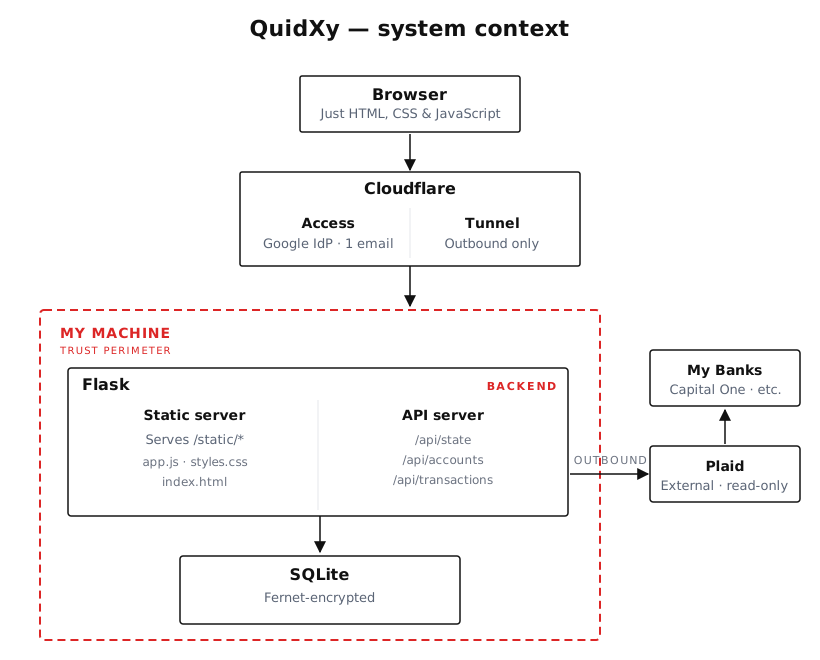
Plaid access tokens and the entire JSON blob of my financial state are Fernet-encrypted at rest, with a master key that lives outside the repo and is mode 600 on disk.
The full encryption story, the four SQL tables, the credential model, and what is encrypted versus not all deserve their own post.
The three surfaces
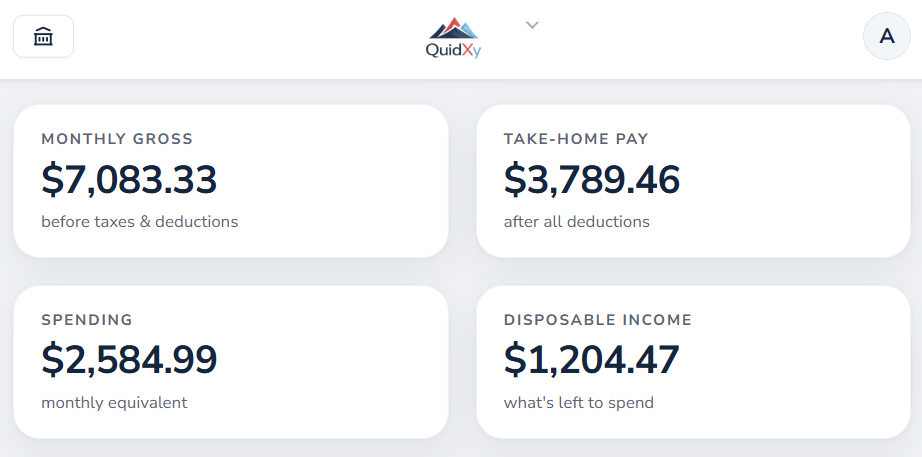
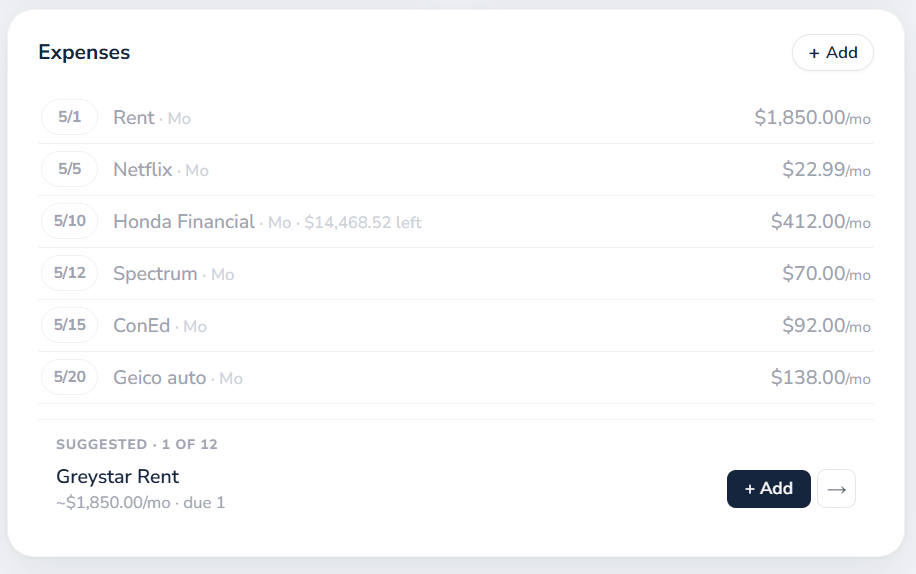
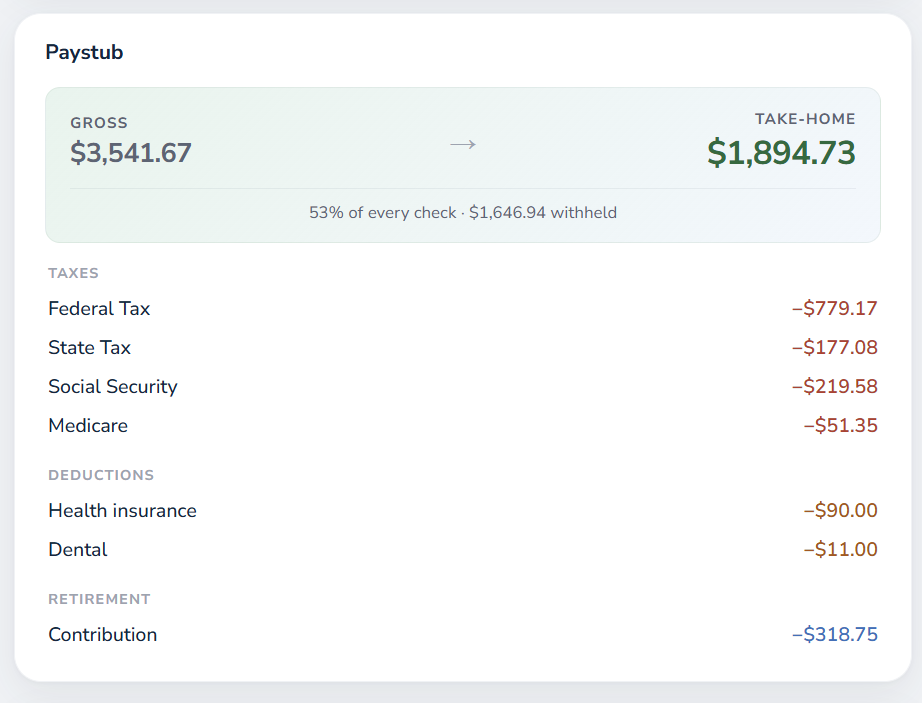
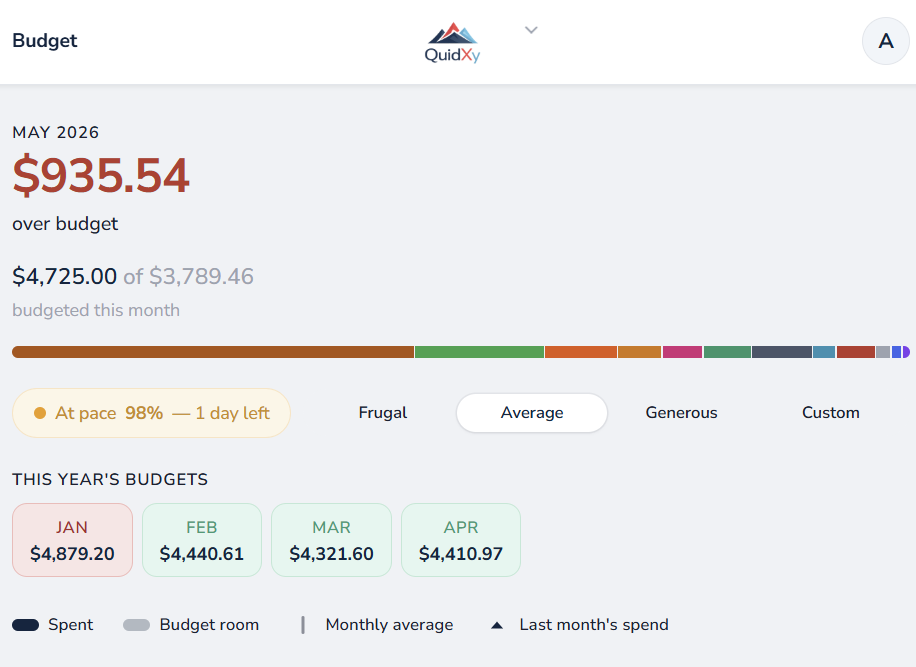
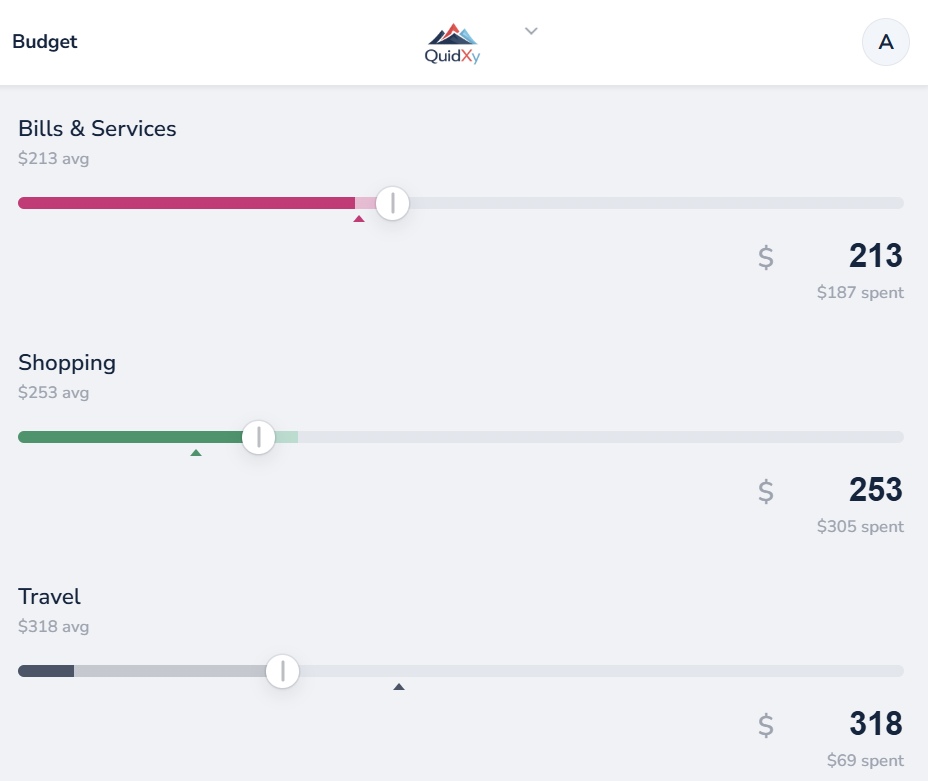
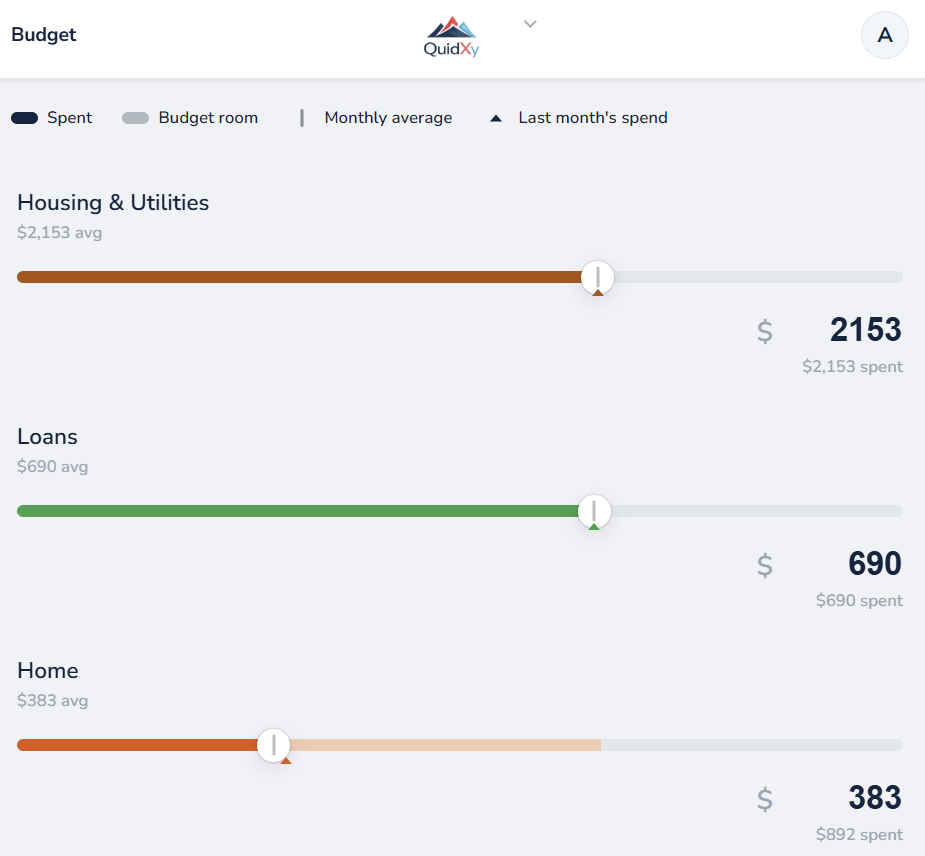
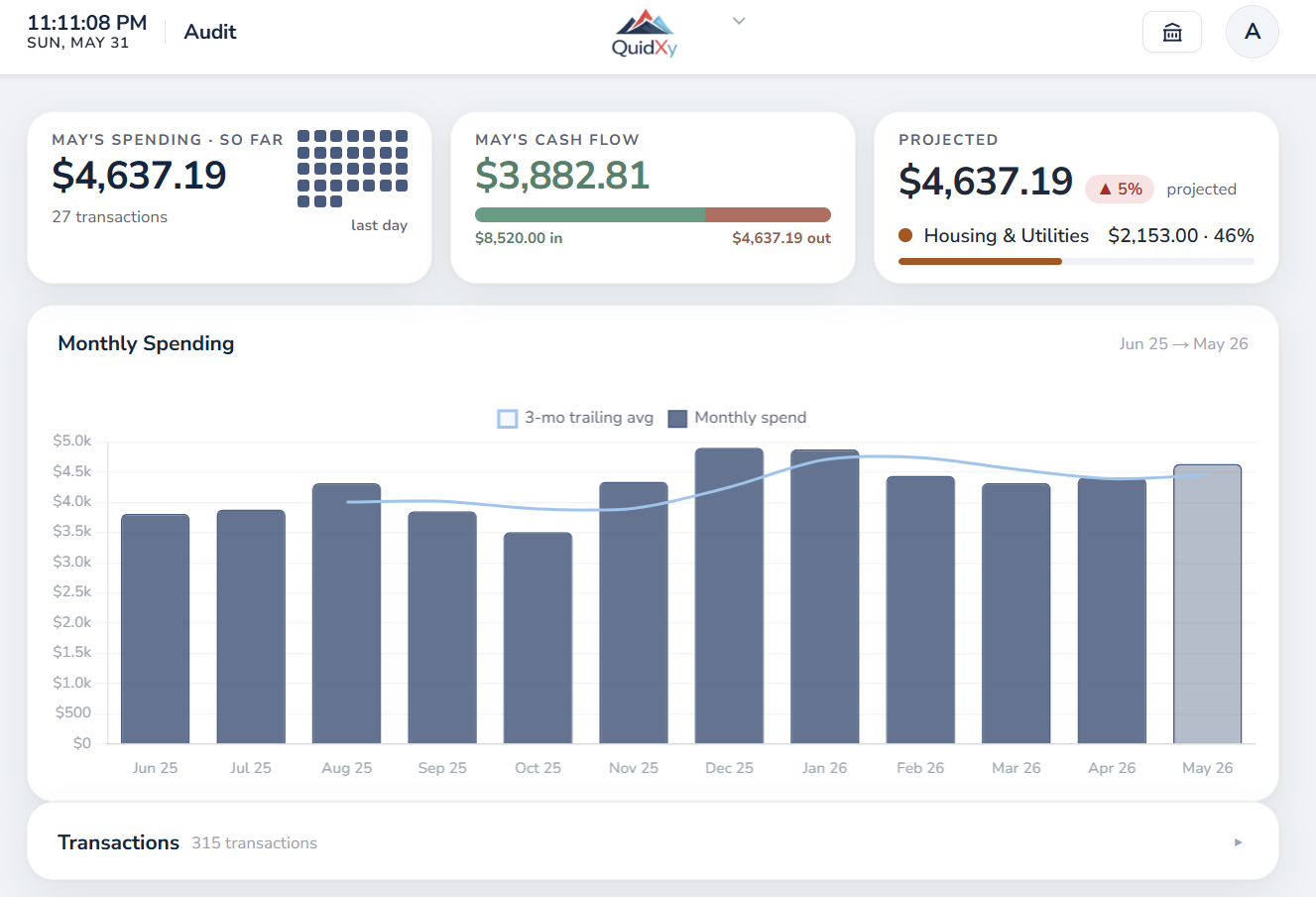
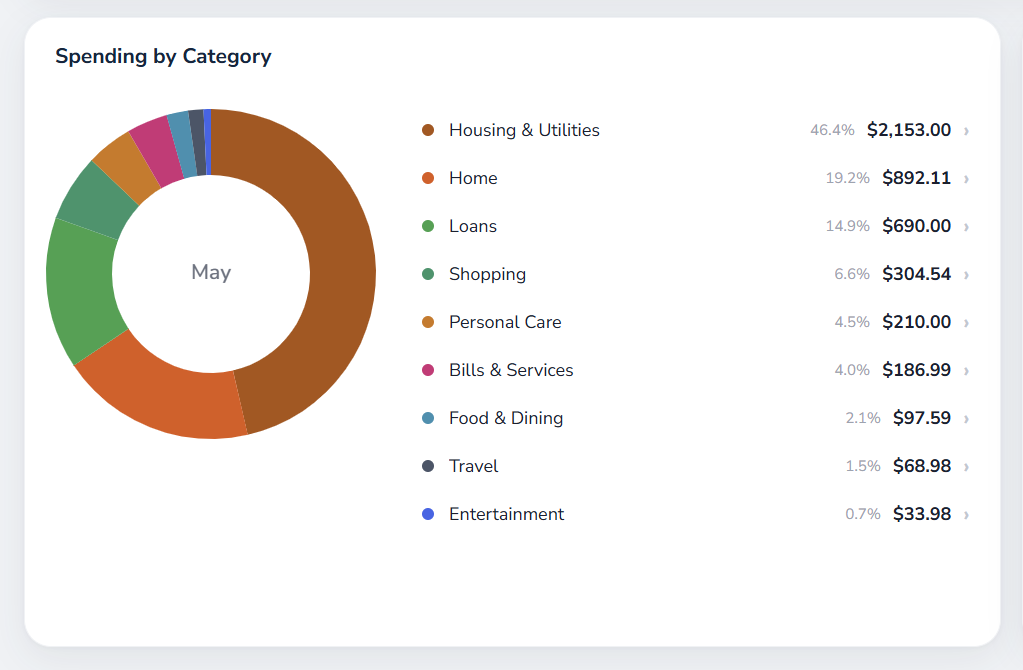
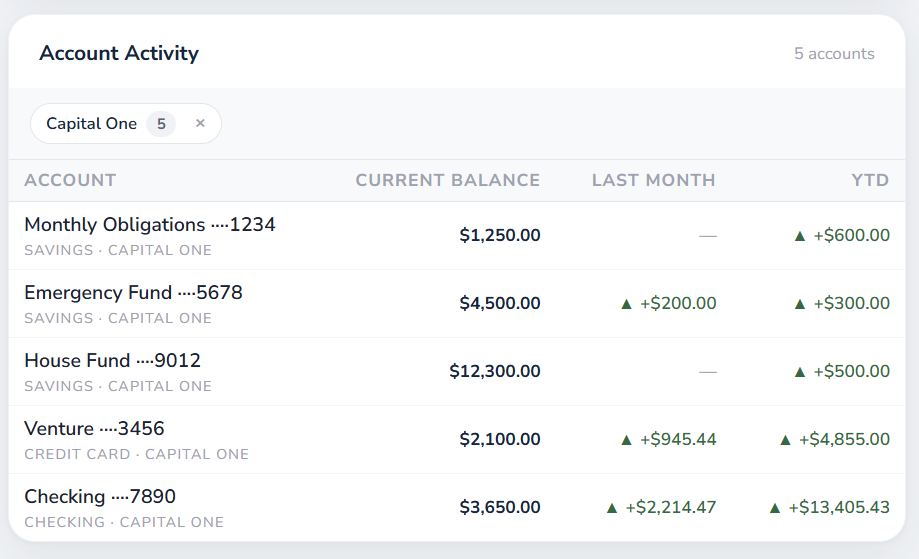
All three run off one Plaid integration, one transaction window, one transfer-exclusion rule, and one parent-category rollup. The same number can't be wrong in two places.
Getting Plaid to work
The proof of concept I started with was a smaller project called QuidDash. It relied on manually downloaded transaction files from each of my banks. That worked, but it wasn't practical and I couldn't see balances. I needed an aggregator.
I went to Plaid first. The thing that set Plaid apart for me was its OAuth flow: I could authorize my bank to share data with my app without my username and password ever passing through the middleman. That mattered.
My first attempt to connect failed. AI suggested my bank was only available to Plaid's Enterprise customers, so I went looking at alternatives and tried Teller.io. Teller's sandbox worked perfectly, but when I went to connect a real bank I learned how Teller actually works: it stores your bank login credentials on their servers. Username, password, sitting in their database. Hard no on requirement #2.
I went back to Plaid and started digging. Nothing in their docs said my bank was Enterprise-only. After a few days I found the real problem: when I ported the QuidDash configuration over, I was requesting both transactions AND investments from Plaid's link flow. My bank doesn't support investments, and Plaid filtered it out of the picker entirely rather than connecting with just what it did support. The AI's guess was wrong. The fix was a one-line change to the product list.
Once I got connected, it was game on.
On AI, on users, on what's next
Did I Use AI? Absolutely. AI was the typing hands. But the architectural decisions are mine: what to build, how the trust perimeter should work, what to encrypt, where to draw the lines between subsystems. There is a real difference between asking Claude to build a finance app and designing the system yourself, then using AI to implement it. This is the second thing.
Who else uses it? Just me. That is the point. QuidXy is built for one person, and almost every design decision flows from that constraint: no user management, no password reset flow, no concurrent-write handling. Single-user is a real, deliberate scope choice, not a limitation.
This is the first piece. The rest of the series goes deeper: